The setup
A hail swath ran through Davis County. Our client — a storm-restoration company running four inspectors, kept anonymous at our preference, ledger on file — took the territory. RavenPoint's agents went to work on the phones: every homeowner qualified live for ownership, roof age, insurance and intent, QA-reviewed, and booked with the call recording attached. Insured households, street-dense, delivered at a pace that kept four field inspectors fully fed: 81 completed appointments across eleven days.
What the inspections produced
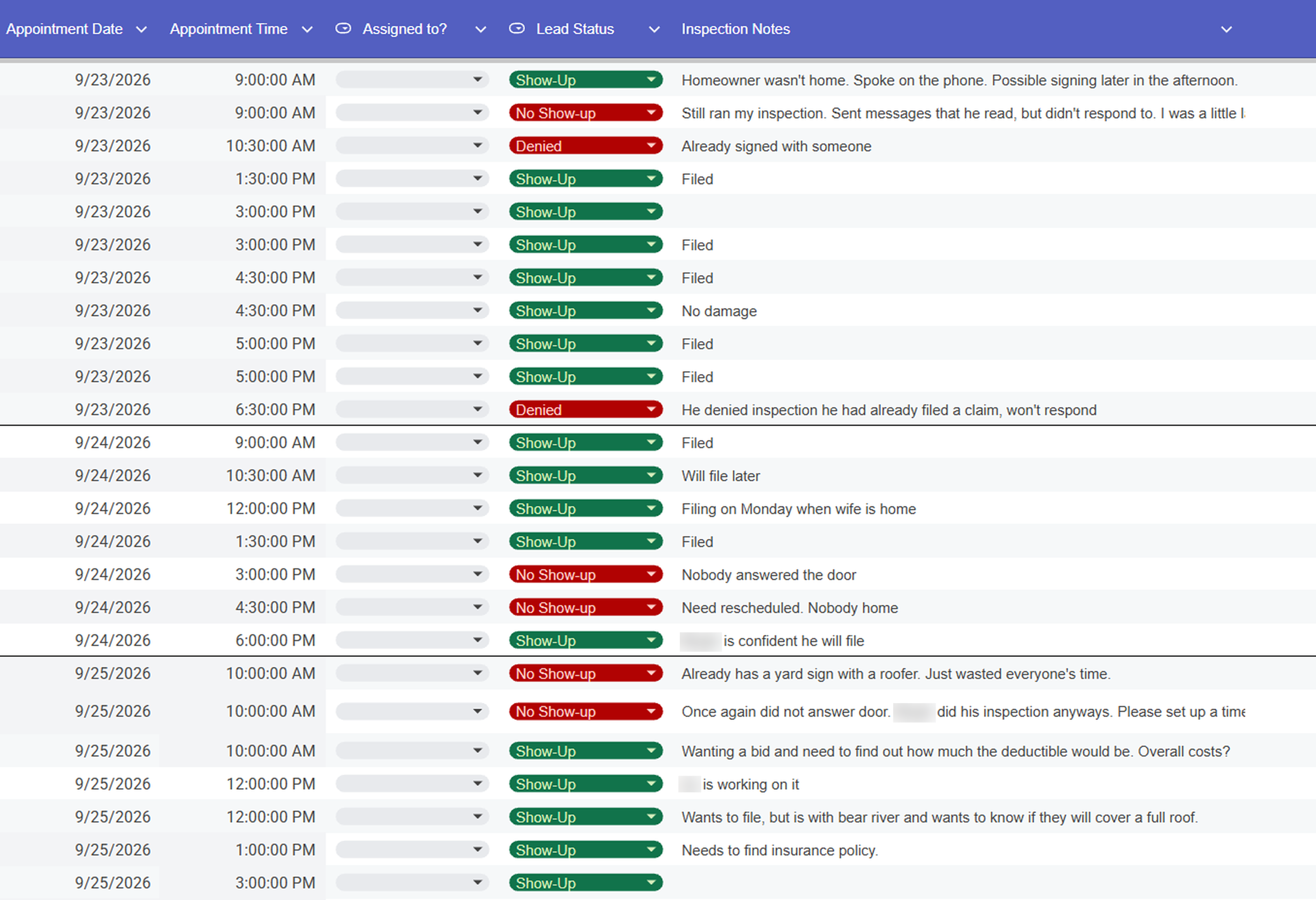
Counting each property visited at its final outcome, the ledger stands at 81 completed appointments: 68 attended — a 91% show-up rate — 7 homeowner no-shows and 6 denials, none of which cost the client a dollar.
Field teams write notes when they have time; they close deals when they don't. So we report the funnel exactly as the ledger records it. Of the 44 attended inspections with outcomes written down:
- 41 found storm damage worth pursuing — 93%.
- 28 ended in insurance claims filed — 64% — seven of them across one homeowner's property portfolio.
- 13 more are mid-conversation: signatures promised, claims being prepared with adjusters, bids and deductibles being worked out.
- 2 roofs came back clean. 1 homeowner is selling and passed.
The other 24 attended inspections closed without the inspector logging an outcome at all — a follow-up list, not a verdict. The client reports signed deals beyond what the notes capture; we publish only what the ledger shows, which makes every number above a floor.
The seven-house phone call
Here's our favorite row in the sheet.
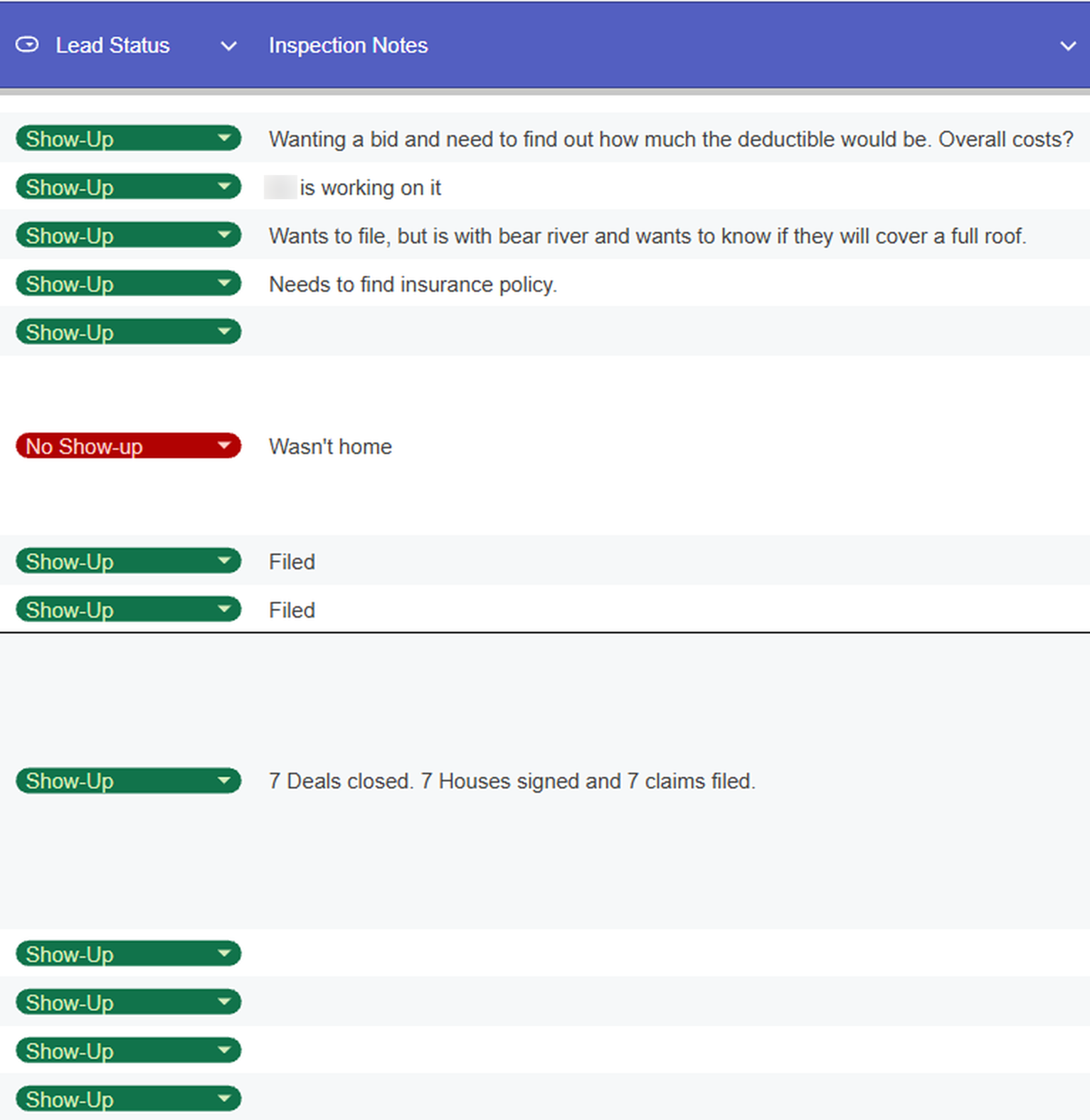
One of our agents dialed a homeowner in Layton. Standard call — ownership, roof age, insurance, storm history. Except somewhere between hello and “does Monday 9 AM work,” the homeowner mentioned he doesn't just own the roof over his head. He owns six rental properties too, several sitting in the same hail swath, and by the end of the conversation he wanted all of them inspected. He gave our agent five addresses on the call — and saved the last two to hand the inspector in person, which tells you everything about how that meeting was going to go. Not because anyone pressured him — because the conversation was good enough that handing one company his entire portfolio felt like the obvious move.
The inspector's note after the visits, verbatim from the ledger:

Most lead companies would sell you that homeowner's number five times and let five roofers race to his doorbell. Our agent had one conversation and the man signed seven roofs. We're not saying every call ends like this. We're saying this is what it looks like when the person dialing actually knows how to talk to a homeowner — and when nobody else is competing for the lead, because nobody else has it.
When things miss, the meter doesn't run
Twelve days of real fieldwork includes misses — and the ledger shows how each kind was handled:
- 7 homeowner no-shows: $0 billed.
- 6 denials — including homeowners already signed elsewhere: $0 billed.
- Appointments our client's own team couldn't make (a rainout, a late arrival)? Excluded from billing and from these stats entirely — they're neither a show nor a no-show, so they count against no one.
- Missed homeowners were re-called, re-confirmed on a recorded line, and re-booked free. One of those free re-books showed up and filed a claim the next day.
- One attended roof had no damage. It was billed — and that's in the agreement both ways: we guarantee a qualified homeowner at the door, verified live and QA-reviewed. We don't guarantee what the hail decided to do. Clients know their exact terms before the first dial.
What this looks like from the client's side
Four inspectors with full calendars for two straight weeks, in one tight storm corridor — no windshield time between territories, neighbors watching inspections happen on their own street. A documented claims pipeline in the dozens before the campaign is even finished. And a follow-up list with names, numbers, recordings and context that most canvassing crews would trade their ladders for.